The Ripple Effect of Reading: Little Listeners to Curious Researchers
Take a look at how reading evolves from the joy of listening to stories in the Early Years to independent exploration, critical thinking and research in the later grades, highlighting how The School of Raya nurtures curiosity and a lifelong love for reading at every stage of a learner's journey.
Sridevi V G
November 24, 2026
0
min read
Where it all begins - The joy of listening.
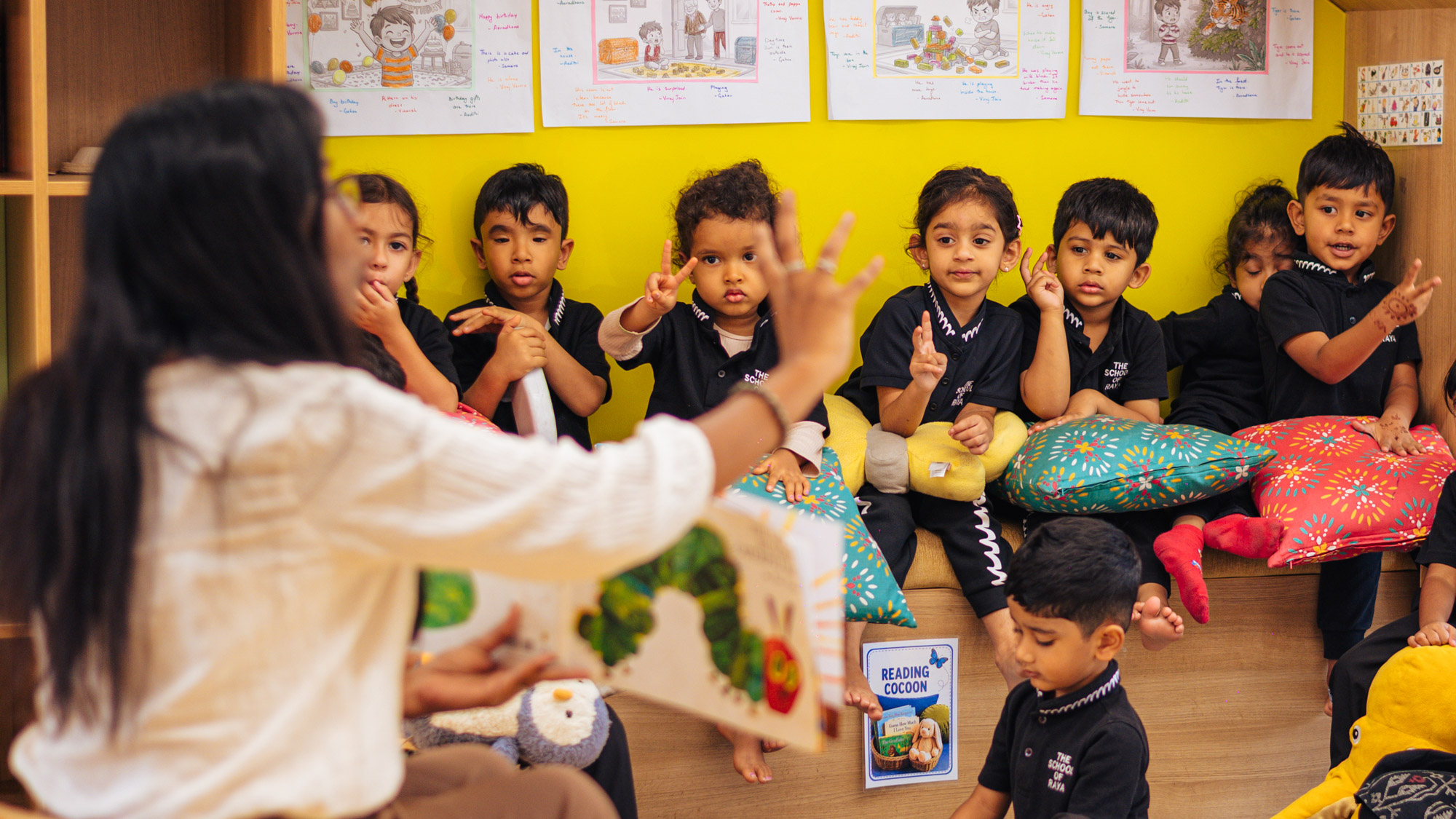
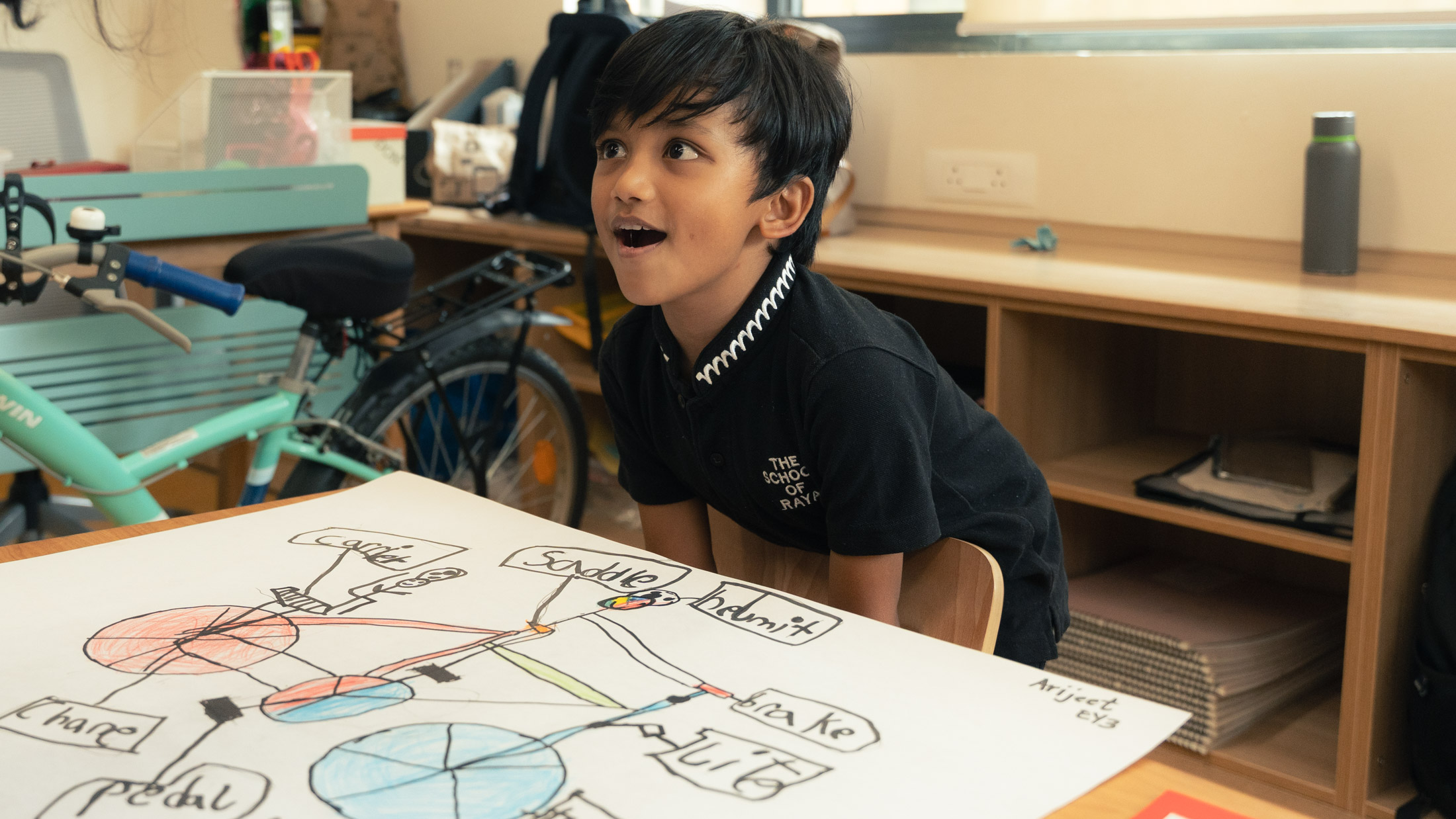
Walk into an early years classroom during storytime and you will see - wide eyes, open mouths, keenly observing the teachers’ expressions, predicting what might happen the next and impatiently waiting to explore the ending.
They gasp when the wolf appears, giggle at silly voices, eyes sparkle as the characters change and constantly inquire about everything. There is something beautiful about this experience. At this age, children may not be independent readers yet, but they are already building a connection with stories, language and information. Listening is the first step to reading. It gives children a safe starting point: they can enjoy an intricate tale before they are expected to read every word by themselves.
The Spark Becomes a Flame
When children are given freedom to choose books that resonate with their interests and are supported through guided reading in the primary years, their initial curiosity gradually blossoms into a deeper interest in reading, exploration and discovery. Here, listening turns into decoding and decoding turns into discovery. We are nurturing children who are comfortable around books, curious about stories and confident enough to express their ideas.
At Raya, students are encouraged to explore different genres and express their preferences:
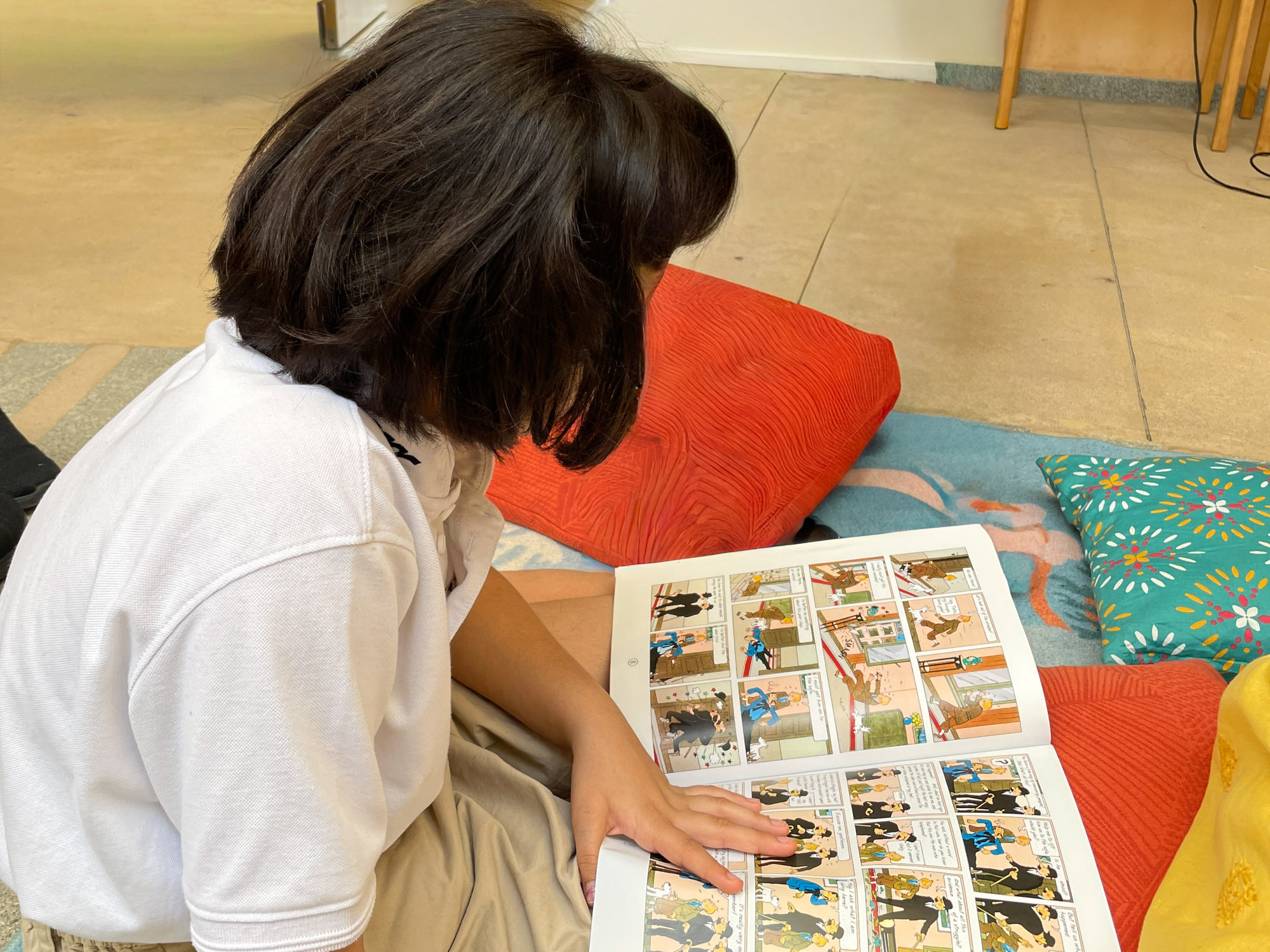
“I like to read comics.”
“I prefer books about dinosaurs.”
“I don’t enjoy fat books.”
“I enjoy reading about football or space.”
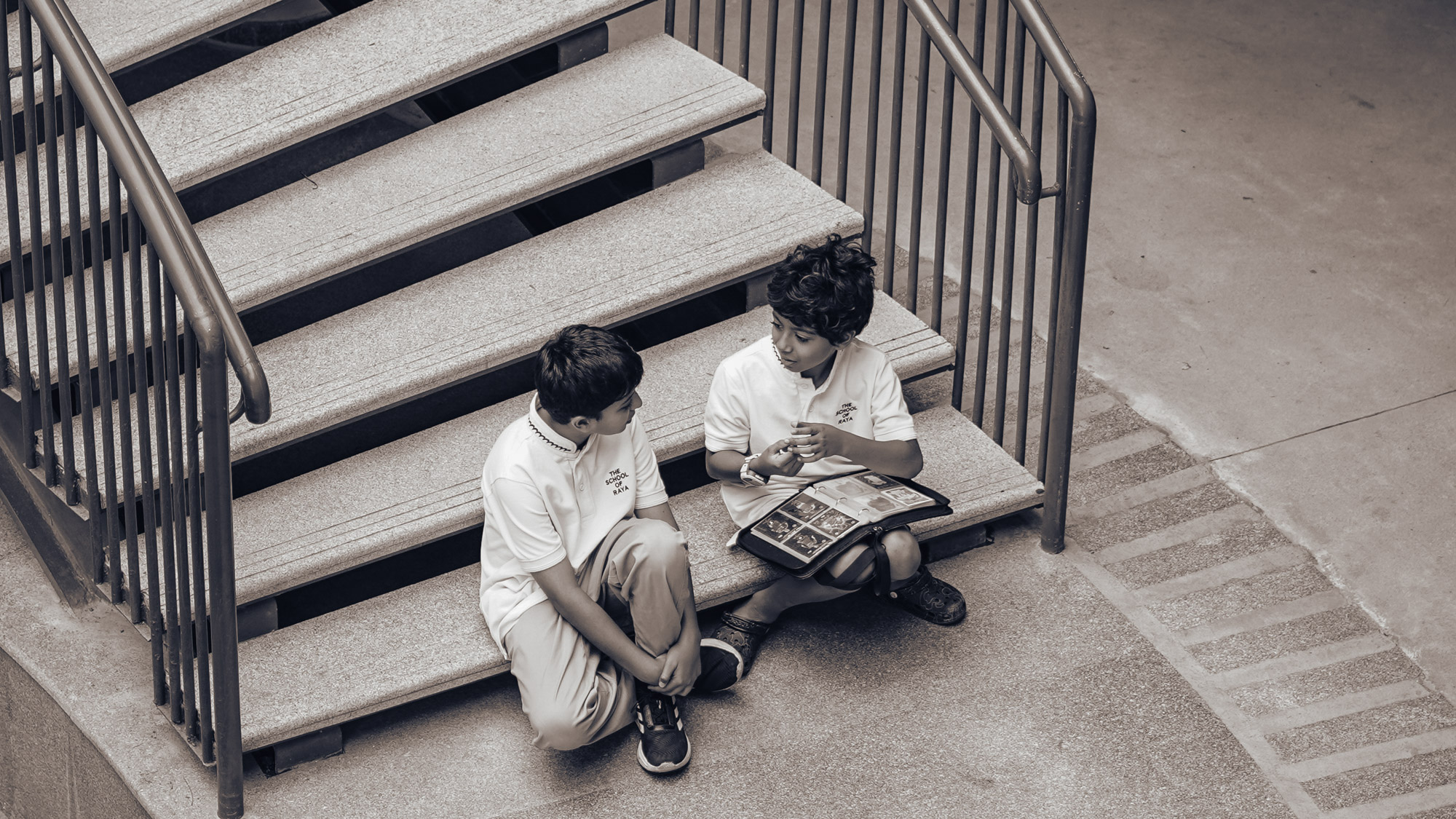
Knowing what they enjoy or don’t enjoy is part of becoming a reader. Every rejected book teaches a child something about their own taste for reading.
Readers become choosy: The “I am not interested” years
As students grow older, their reading choices become more personal - and sometimes more selective. Their schedules fill up, screens get louder and reading becomes choosy…
We often hear them saying…
“I’m not interested.”
“This is quite boring.”
“Can I just read an online story?”
If these sound familiar, believe me - Reluctant reading is not the same as non-reading. Most reluctant readers are not rejecting reading itself. In fact, they are not reluctant readers but, emerging or selective readers. They may be rejecting the book, the level or the moment, because their interests become more varied, their questions become more complex and they encounter a wider range of texts. Letting children choose what they read increases motivation and helps them connect with stories and ideas meaningfully.
At Raya, we encourage learners to spend time with physical books because turning pages, browsing covers, sharing and recommending books with friends, and visiting the library foster a culture of mindful reading. At the same time, we recognise that audio books, e-books, digital articles can be practical entry points for selective readers. Audiobooks, in particular, shape a child’s cognitive perception by requiring their brain to construct meaning, mental imagery, and emotional context purely from sound.
Growing Curiosity - Reading becomes Research
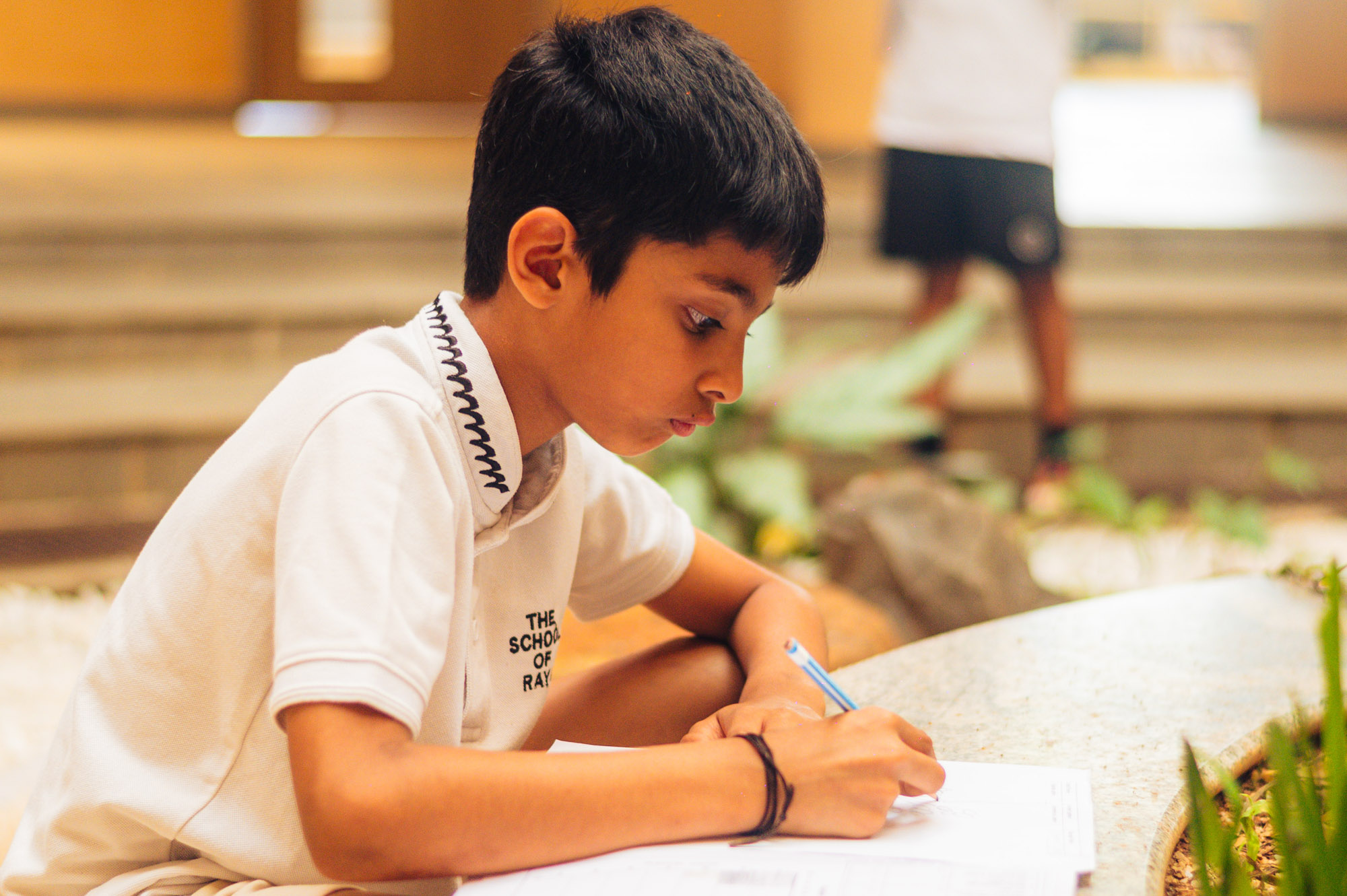
Reading takes on a new magic as the learners journey through the final years of MYP and into DP. The student who once said, “I am not interested” is now sitting with five tabs open, a few books and newspapers beside them and a question they genuinely want to answer. At this juncture, they may not call it reading, instead, they own their reading calling, “My Project”. Actually, this is reading in its most powerful form.
Through the Personal Project, Inter Disciplinary Units and research-based learning experience, MYP students build habits that the DP will demand everyday. While in DP, reading grows heavier, longer and more independent. Research reading is driven by a question, and this question is the strongest motivator. At this stage, learners admit that reading is no longer simply about understanding what has already been written, but, it becomes a way of participating and involving in academics and contributing in new thinking.
Reading - A journey that never ends
Can you imagine a child who once gasped at the wolf during storytime, who eagerly picked adventure books in PYP, who later shrugged and said, “I am not interested in reading” in the middle years and who now in DP, spends hours exploring various research materials and papers, comparing perspectives and chasing answers to the questions that had caught their attention?
It is the same child, growing through different stages of curiosity. The little listener became a book explorer, the selective reader became a critical thinker, and the curious learner is now an independent researcher. At Raya, we never fail to kindle that curiosity in our learners with the right book, the right question and the right support at each stage, until reading is no longer a task but a way of seeing the world.
Written by
Sridevi V G
Academic Librarian
With over 25 years of experience across diverse curricula, Sri Devi brings a passion for English, Theatre and innovative learning. She believes in nurturing creativity, critical thinking and human values through meaningful learning experiences and genuine connections.
Explore more stories
School of Thought
The Pencil vs. The Keyboard: Is Handwriting Still Winning?
Take a look at the importance of handwriting in early childhood development, exploring how it strengthens brain connections, builds fine motor skills and nurtures creativity, while highlighting how thoughtfully scaffolded experiences at The School of Raya lay the foundation for confident young writers.
Jeyashanmugapriya Dhanikachalam
November 17, 2026
•
0
min read
“Now, where did I put that little note?” We have all had that moment, searching every corner of our desk for a note we were absolutely sure we had ‘kept safely '! A shopping list scribbled on a piece of paper, a quick reminder in a notebook, or a phone number hastily jotted down. In a world where we type, tap and swipe our way through the day, how often do we pause to appreciate the simple pleasure of writing by hand?
As we learn to write, our eyes, hands and brain work together in ways we may not immediately notice. Handwriting engages multiple brain networks, bringing together sensory, motor and symbolic processes (James, 2017). Two aspects are particularly important: orthographic-motor integration, which connects our visual recognition of a letter with the hand movements needed to form it, and handwriting automaticity, the ability to write fluently without consciously thinking about every movement. As children develop these skills, less attention is needed to form letters, leaving more room to express and organise their ideas.
Yet, there is another side to handwriting that we perhaps don't talk about enough: ‘the pleasure of making it our own through creativity and personal expression’. One favourite little ritual is leaving the last page of a journal for doodles, zentangles and creative experiments. Alphabets can take on personalities of their own, with different shapes and font styles reflecting different moods. After all, why should every '𝓐' or '𝕊' look the same?
Looking at how our youngest learners begin this journey at The School of Raya makes it easy to appreciate how thoughtfully these foundations are built in the Early Years Programme (EYP). Playdough mixing strengthens little fingers and hand muscles; sand, air and table tracing introduce children to patterns and strokes before they progress to larger patterns and notebook work. Cutting, tearing, pouring and crumpling further develop hand strength and coordination, while crayons, chalk, half-length pencils and pencil grippers support their gradual transition to writing. The progression towards four-line notebook practice is thoughtfully scaffolded.
Before children pick up a pencil, their hands are already learning. They are first given the time, experiences, and opportunities to prepare for the task. That is what getting the right start looks like!
As author Anna Quindlen beautifully observes, “Something written by hand is a piece of your personality on paper.”
Perhaps that is why the humble pencil still deserves a special place in our increasingly digital world!
Curious to discover what happens when we put pen to paper? Explore The Pivotal Role of Handwriting in Learning and Development, a research-based overview of the fascinating connections between handwriting, brain development and learning (Cognitive, Academic, and Neural Perspectives).
Sports
To Be Strong Is To Be You
A reflection on how climbing teaches us to embrace individuality, overcome self-doubt and find strength in our own journeys, reminding us that true growth comes from being ourselves rather than comparing our progress with others.
J Aiswarya
November 10, 2026
•
0
min read
“How are you so strong?”
You’ve probably asked it, or heard someone ask it when a climber pulls through a huge move, finishes the route, and everyone watching is impressed. I’ve asked myself, and I’m not even a good climber.
I never climbed before I joined this school. I gave up on every sport I tried, usually on day one, because I’d look at the person beside me and decide I wasn’t made for it. What I never stopped to think about was that I was comparing my first step with someone’s hundredth and in reality, I think many of us do this, not only in sports. We do it with a new job, a new subject, a skill we wish we’d started years ago. We just look at someone ahead of us and conclude that we’re behind. But maybe the better question isn’t how far behind we are, but how far we’ve come since we started.
Now, strength is only a part of climbing. Before a climber leaves the ground, they study the route. However, two climbers can look at the same wall and plan two completely different beta, which in climbing means how you choose to move through. Surprisingly, both climbers' strategies are right! Because what works for one may not work for the others. That’s when something clicked for me! For about ten years I had tried to be the best at everything I did, not just in sports, but in studies, as a friend, as a daughter, and even as a stranger! And never once asked what my own version in all of these characters might look like. This is what climbing taught me.
On a wall you can’t climb as anyone else. It’s your reach, your technique, your pace. Because of this, it’s the first place I felt a part of myself show up. And the most interesting part about climbing is you fall. A lot. Just like we do in our lives, every time something doesn’t go as we expected it to. But that’s the thing about life. These learnings help us take a moment, make us feel proud of trying, and bring that main character energy in our lives.
I hope that’s given you a reason to BE YOU.
I’m not writing this as someone who has it all figured out. Some days a part of me is still standing at day one. Climbing goes badly, the route I was sure I’d finish doesn’t happen, it takes far longer than I expected, and a quiet voice says maybe this isn’t for me. And I keep climbing anyway. Because a bad day doesn’t make you bad at it. It doesn’t mean you’re falling behind. It means you’re still finding your way, and that takes time. As J.M. Storm writes, “the universe always falls in love with a stubborn heart.” Being stubborn doesn’t mean to refuse to change but it’s about showing up even when it gets hard by being you.
Climbing also gave me something I didn’t see coming: people. There are always moments on every route when I am stuck halfway through, my arms are burning! And my position is awful and every part of me just wants to come down. That’s when I hear my climbing coach and my friends say ”Come on, you got this! It’s day one or one day!” That makes me want to at least try going up even if I feel I might fall.
Lastly, I’ve realised the best part was never the final hold, the one I touch and match my hands on. It’s the whole route I chose, the way I move my body to reach each hold, and the ones who were standing at the bottom cheering me to keep going!
“Have we vanquished an enemy? None but ourselves.” - George Mallory
School of Thought
The Process of Becoming
An exploration of the value of the learning journey in an AI-driven world, highlighting how experimentation, reflection and resilience shape independent thinkers and creative problem-solvers.
Sneha Hariharan
November 3, 2026
•
0
min read
“Why bother figuring out which colour looks best on the frame of my wooden drawer when I can just ask AI to show me samples?”
This question, echoed in my classroom and in different forms across grades, unsettled me. Not because I oppose AI, but because something felt missing.
Sitting with this thought, I went back to the days of making before generative AI, before the endless possibilities of AI, before it became the answer to almost every question. Learning was a process of trial and error. We sat with problems, searched Google, opened ten tabs, discarded nine, and followed the one that led us down an unexpected rabbit hole. But what came before Google? An era when people turned to libraries and sought out learned people for discussion, discovering that learning was about much more than simply finding the answer.
Across these eras, one thing remained constant: the work of finding out. We might have discarded 95% of our attempts, building on the useful 5%. But did we really discard that 95%? Every failed attempt shaped our understanding, teaching us what did not work and bringing us closer to what did.
This is precisely what the Design Cycle seeks to nurture. Making is messy, nonlinear, and often uncomfortable. Students begin with energy, ambitious ideas, and a plan to conquer it all. But as they engage with materials, their progress slows. Measurements do not align, ideas fail to translate from paper to reality, and motivation dips. They find themselves navigating the uncomfortable space between knowing what they want to create and figuring out how to create it.
Then comes a breakthrough, sometimes a complete shift in direction, sometimes a tiny adjustment that makes something work. Their energy returns, their confidence grows, and they find their way forward. This cycle of challenge, reflection, adaptation, and discovery is where competencies are built and learning takes root. Through making, students learn that design extends beyond the sketch; it demands patience, resourcefulness, and a willingness to revise, rethink, and begin again.
AI, too, can have a place in this journey, serving as a launchpad for exploring ideas, generating possibilities, and developing an initial plan. But the real learning begins when students engage with the material, test their assumptions, encounter setbacks, and find their own way forward. It is through this process that they move beyond simply executing a plan to becoming designers and effective learners who can navigate uncertainty.
And that is exactly what we echo in our classrooms: it is always the process over the product. Our responsibility is to empower learners to move beyond dependence on tools and prepare them for an unknown future. While how we do this will evolve, the what and why remain clear: to nurture independent thinkers who can question, create, adapt, and learn. After all, the goal is not merely to find the answer, but to become someone capable of finding it.