The Future is Interdisciplinary
Discover how interdisciplinary learning blends art, science, and curiosity to foster complex thinking, creativity, and real-world problem solving.

The world no longer asks for answers that fit neatly into boxes. It asks for people who can sit with complexity, notice patterns, and move comfortably between logic and imagination. Today’s challenges — climate change, mental health, technology ethics, food security — don’t belong to one subject. They belong to everyone.
At The School of Raya, we believe that interdisciplinary learning is not a trend. It is a necessity.
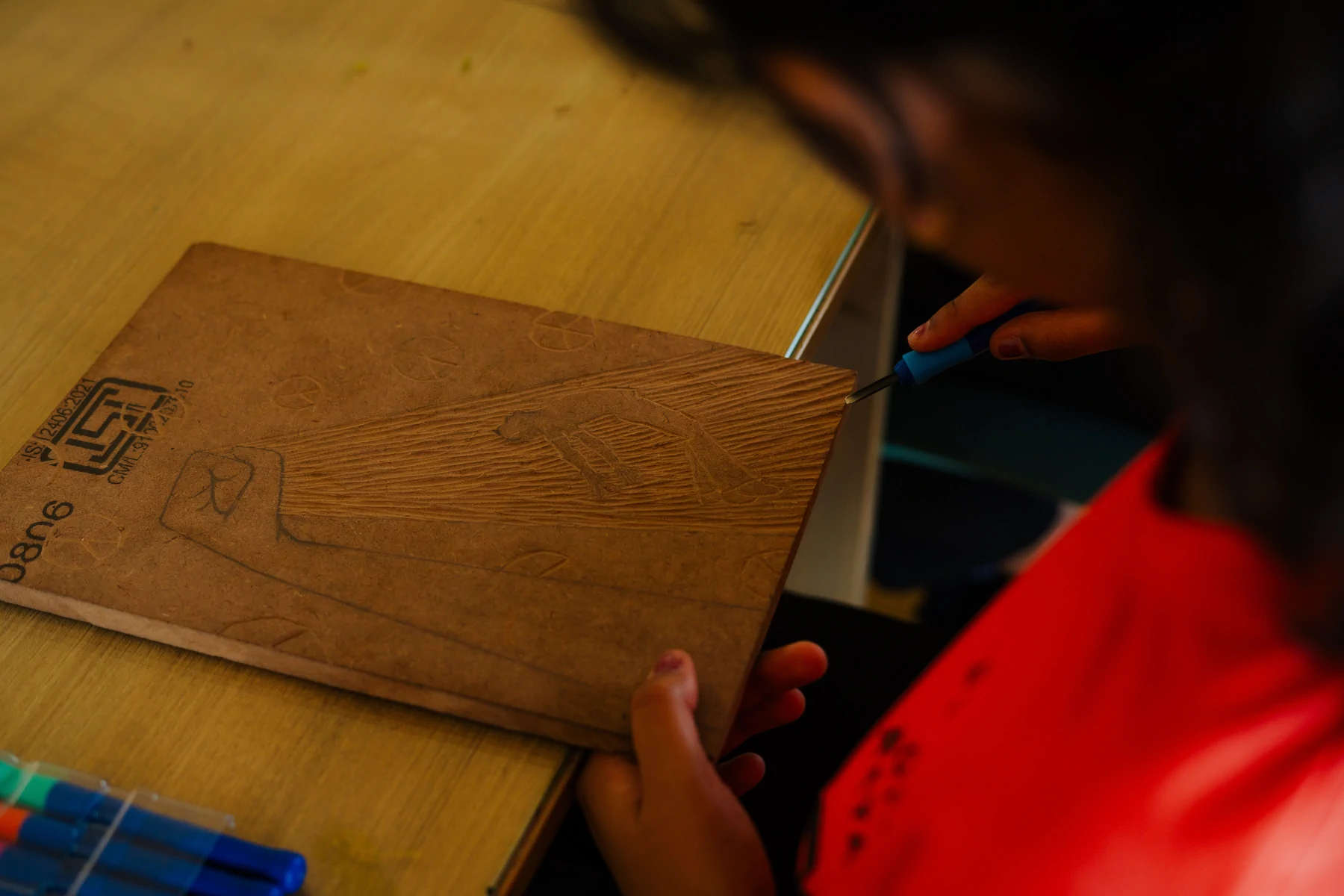
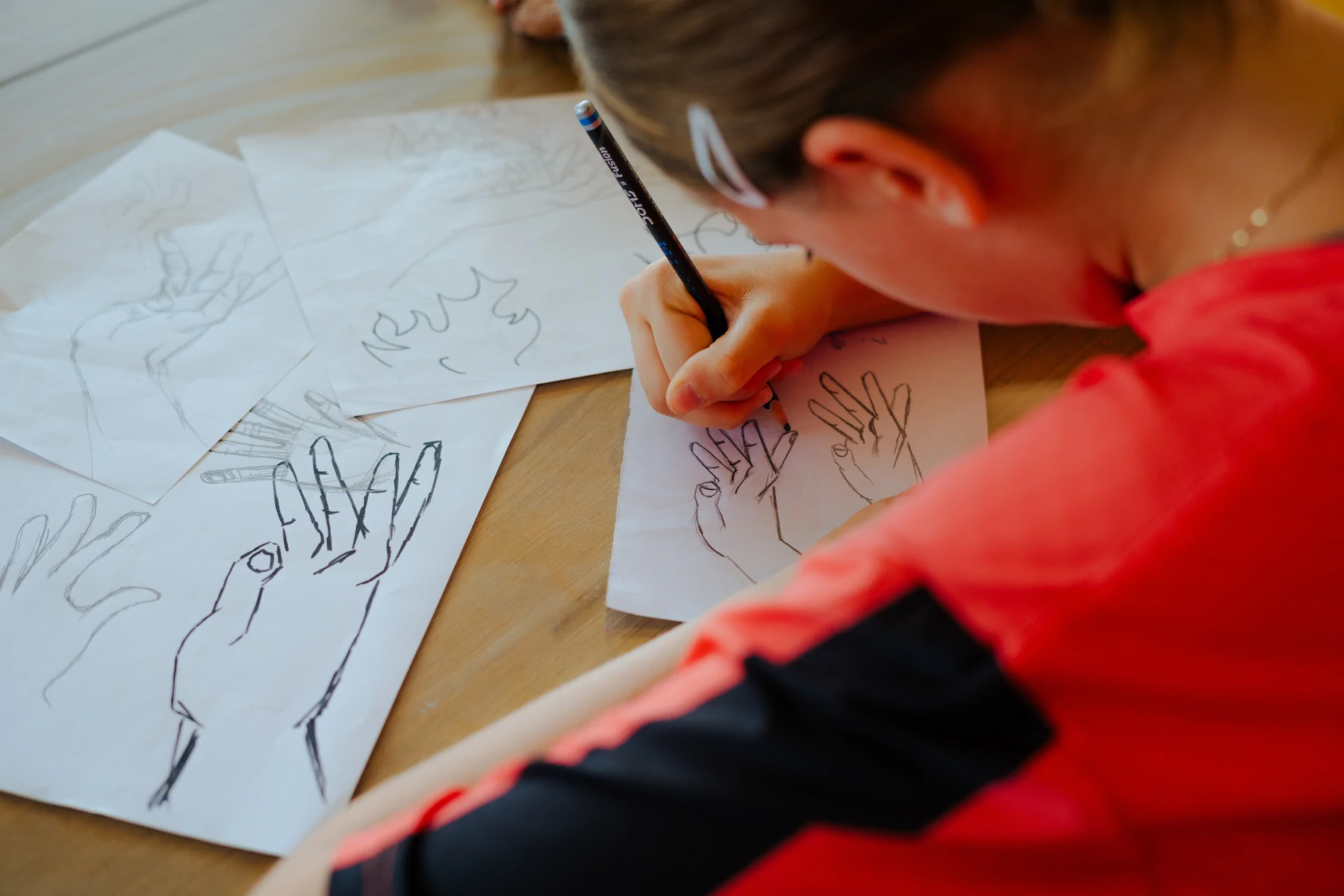
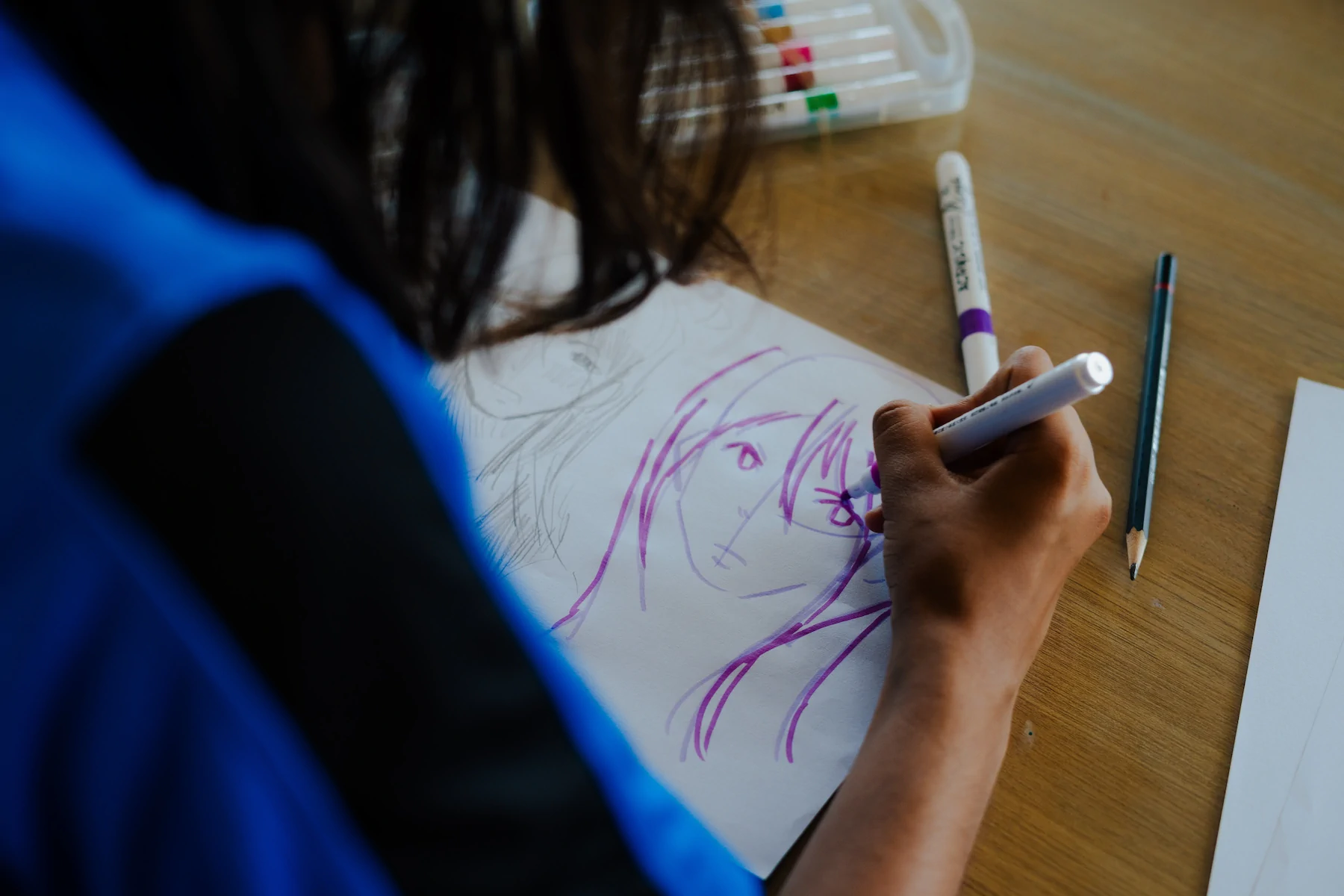
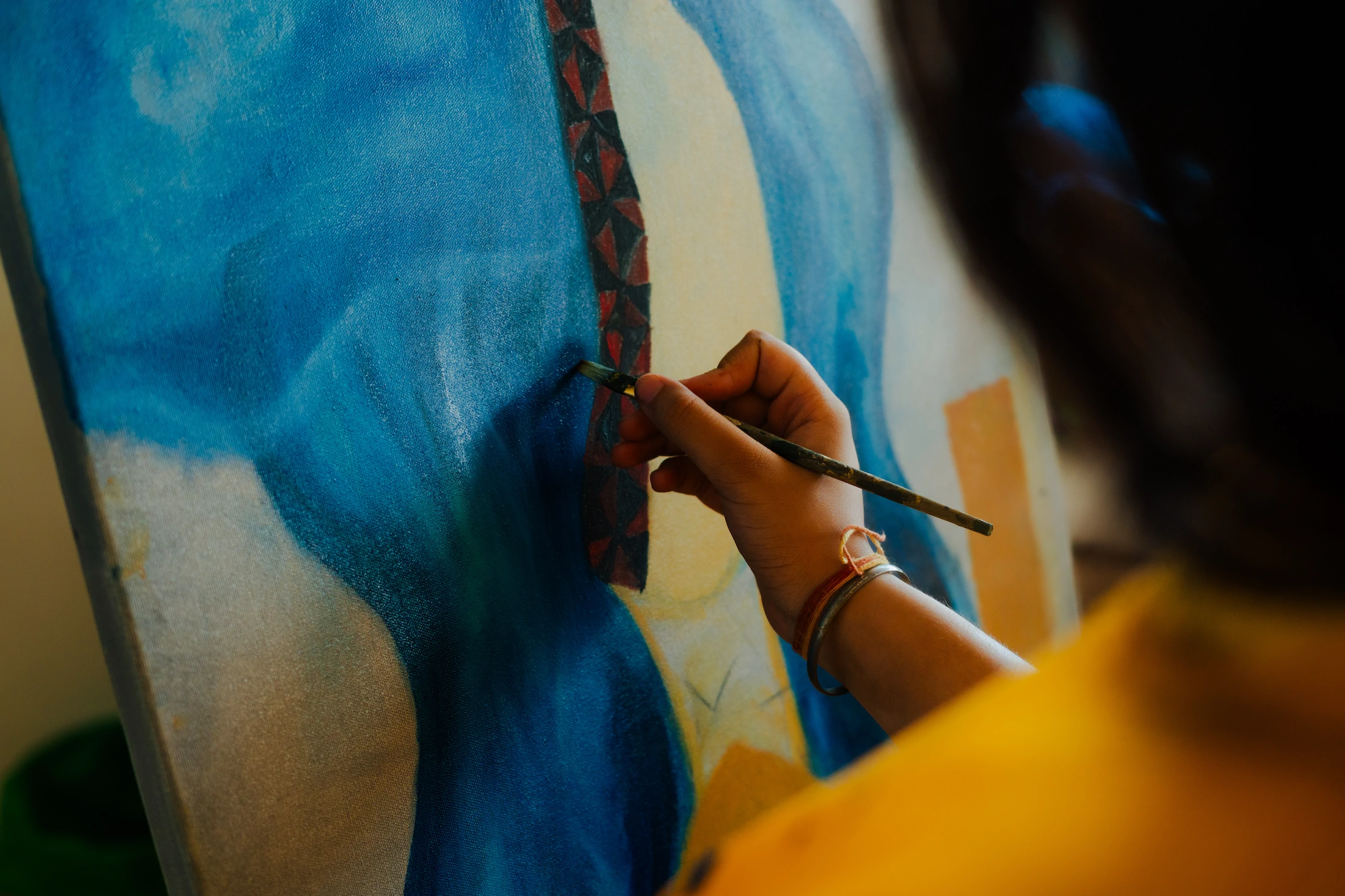
In our Visual Arts classroom, students don’t just paint or sketch. They investigate. A recent unit had students exploring bioluminescence — the science of light produced by living organisms. What began as a biology concept became a design challenge: How do you represent invisible light? How do you make people feel wonder?
Students researched the chemistry, sketched organisms under microscopes, and created large-format paintings that captured both scientific accuracy and emotional resonance. The result was work that neither a pure science class nor a pure art class could have produced alone.
Interdisciplinary learning works because curiosity doesn’t respect subject boundaries. When a student asks why van Gogh painted the way he did, the answer pulls in neuroscience, history, mental health, and colour theory. When they ask how music affects mood, they’re touching psychology, physics, and culture simultaneously.
We lean into those moments. We follow the question wherever it leads.
Students who learn across disciplines develop the ability to transfer knowledge — to take a concept from one domain and apply it meaningfully in another. They become comfortable with ambiguity. They learn that not knowing is the beginning of inquiry, not a failure.
They also develop empathy. When you study a problem from multiple perspectives — historical, scientific, artistic, ethical — you begin to understand that most real issues are genuinely complex. That understanding changes how you engage with the world.
The future belongs to people who can think across boundaries. We are building those people, one question at a time.


%20(1).png)
You’ve probably asked it, or heard someone ask it when a climber pulls through a huge move, finishes the route, and everyone watching is impressed. I’ve asked myself, and I’m not even a good climber.
I never climbed before I joined this school. I gave up on every sport I tried, usually on day one, because I’d look at the person beside me and decide I wasn’t made for it. What I never stopped to think about was that I was comparing my first step with someone’s hundredth and in reality, I think many of us do this, not only in sports. We do it with a new job, a new subject, a skill we wish we’d started years ago. We just look at someone ahead of us and conclude that we’re behind. But maybe the better question isn’t how far behind we are, but how far we’ve come since we started.

Now, strength is only a part of climbing. Before a climber leaves the ground, they study the route. However, two climbers can look at the same wall and plan two completely different beta, which in climbing means how you choose to move through. Surprisingly, both climbers' strategies are right! Because what works for one may not work for the others. That’s when something clicked for me! For about ten years I had tried to be the best at everything I did, not just in sports, but in studies, as a friend, as a daughter, and even as a stranger! And never once asked what my own version in all of these characters might look like. This is what climbing taught me.
On a wall you can’t climb as anyone else. It’s your reach, your technique, your pace. Because of this, it’s the first place I felt a part of myself show up. And the most interesting part about climbing is you fall. A lot. Just like we do in our lives, every time something doesn’t go as we expected it to. But that’s the thing about life. These learnings help us take a moment, make us feel proud of trying, and bring that main character energy in our lives.

I hope that’s given you a reason to BE YOU.
I’m not writing this as someone who has it all figured out. Some days a part of me is still standing at day one. Climbing goes badly, the route I was sure I’d finish doesn’t happen, it takes far longer than I expected, and a quiet voice says maybe this isn’t for me. And I keep climbing anyway. Because a bad day doesn’t make you bad at it. It doesn’t mean you’re falling behind. It means you’re still finding your way, and that takes time. As J.M. Storm writes, “the universe always falls in love with a stubborn heart.” Being stubborn doesn’t mean to refuse to change but it’s about showing up even when it gets hard by being you.
Climbing also gave me something I didn’t see coming: people. There are always moments on every route when I am stuck halfway through, my arms are burning! And my position is awful and every part of me just wants to come down. That’s when I hear my climbing coach and my friends say ”Come on, you got this! It’s day one or one day!” That makes me want to at least try going up even if I feel I might fall.

Lastly, I’ve realised the best part was never the final hold, the one I touch and match my hands on. It’s the whole route I chose, the way I move my body to reach each hold, and the ones who were standing at the bottom cheering me to keep going!
“Have we vanquished an enemy? None but ourselves.” - George Mallory


“Why bother figuring out which colour looks best on the frame of my wooden drawer when I can just ask AI to show me samples?”
This question, echoed in my classroom and in different forms across grades, unsettled me. Not because I oppose AI, but because something felt missing.
Sitting with this thought, I went back to the days of making before generative AI, before the endless possibilities of AI, before it became the answer to almost every question. Learning was a process of trial and error. We sat with problems, searched Google, opened ten tabs, discarded nine, and followed the one that led us down an unexpected rabbit hole. But what came before Google? An era when people turned to libraries and sought out learned people for discussion, discovering that learning was about much more than simply finding the answer.

Across these eras, one thing remained constant: the work of finding out. We might have discarded 95% of our attempts, building on the useful 5%. But did we really discard that 95%? Every failed attempt shaped our understanding, teaching us what did not work and bringing us closer to what did.
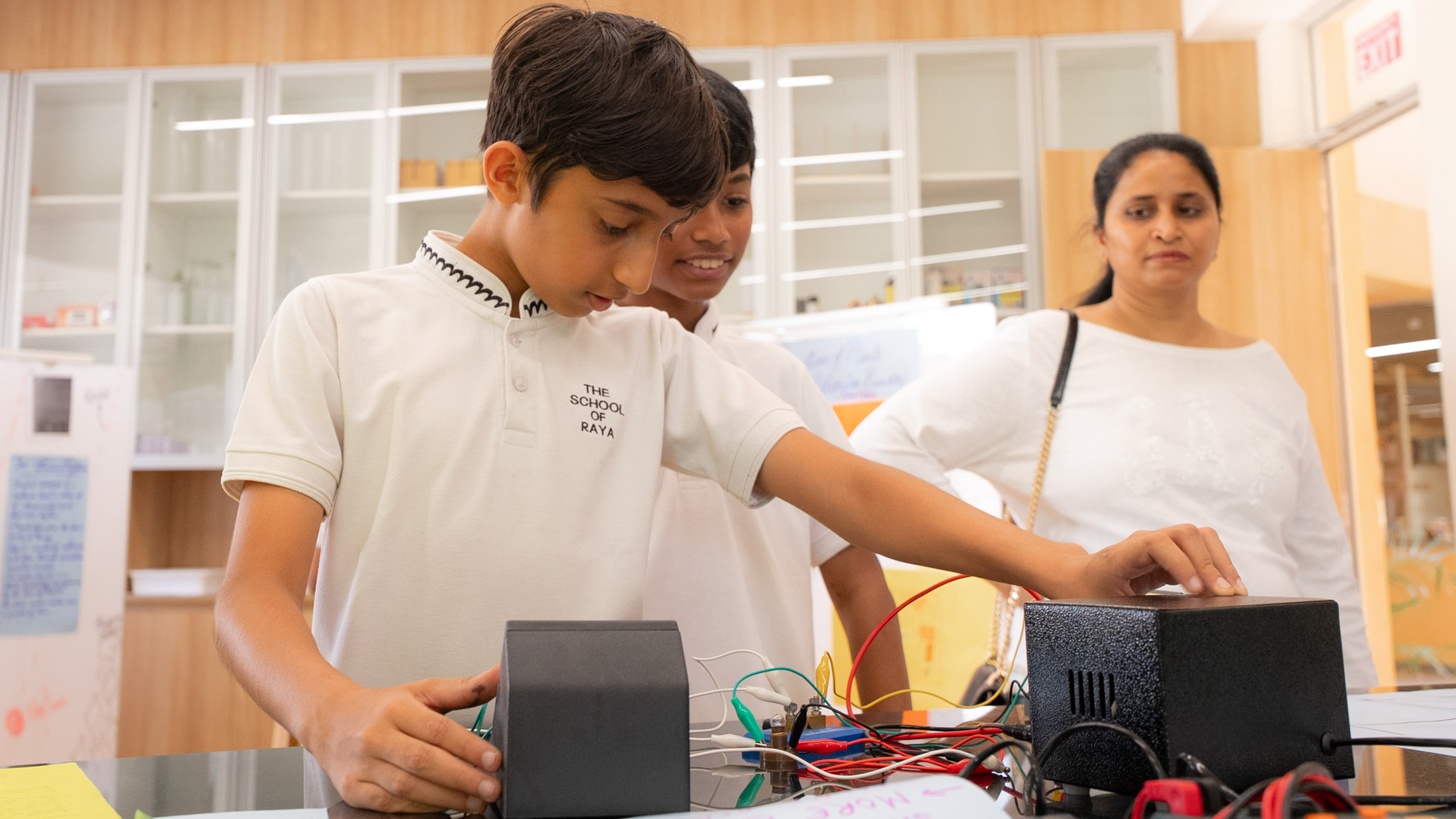
This is precisely what the Design Cycle seeks to nurture. Making is messy, nonlinear, and often uncomfortable. Students begin with energy, ambitious ideas, and a plan to conquer it all. But as they engage with materials, their progress slows. Measurements do not align, ideas fail to translate from paper to reality, and motivation dips. They find themselves navigating the uncomfortable space between knowing what they want to create and figuring out how to create it.
Then comes a breakthrough, sometimes a complete shift in direction, sometimes a tiny adjustment that makes something work. Their energy returns, their confidence grows, and they find their way forward. This cycle of challenge, reflection, adaptation, and discovery is where competencies are built and learning takes root. Through making, students learn that design extends beyond the sketch; it demands patience, resourcefulness, and a willingness to revise, rethink, and begin again.

AI, too, can have a place in this journey, serving as a launchpad for exploring ideas, generating possibilities, and developing an initial plan. But the real learning begins when students engage with the material, test their assumptions, encounter setbacks, and find their own way forward. It is through this process that they move beyond simply executing a plan to becoming designers and effective learners who can navigate uncertainty.
And that is exactly what we echo in our classrooms: it is always the process over the product. Our responsibility is to empower learners to move beyond dependence on tools and prepare them for an unknown future. While how we do this will evolve, the what and why remain clear: to nurture independent thinkers who can question, create, adapt, and learn. After all, the goal is not merely to find the answer, but to become someone capable of finding it.


There is something rather revealing about the questions students ask when they are struggling. Not the questions they ask because a teacher has invited them to participate, or because an examination requires a response. I mean the other questions. The ones that emerge when the books are closed, the classroom is quieter, and a student finally admits that something isn’t quite making sense.
“I don’t know how to do this.”
“How do I get better?”
“How do I even begin?”
I have spent enough time around students to notice that, beneath many of these conversations, there is a remarkably persistent little word: how.

The word how does a remarkable amount of work for its four letters. It can be scientific, philosophical, practical, emotional and occasionally exasperated. How does gravity work? How do people decide what is right? How can a poem make us feel something
we cannot quite explain? How does one get through Monday?
It is a word that refuses to stay in one subject.
Why, on the other hand, can be a rather complicated business. Why did I fail? Why can’t I understand this? Why does this keep happening? Entire afternoons can disappear into the business of asking why, occasionally with very little to show for it.
How is different. It does not necessarily promise an answer, but it suggests that a way forward might exist. How do I approach this? How might I see it differently? How can I make sense of something that currently feels beyond me?
And there, I think, is an important distinction between education that delivers knowledge and education that develops a learner. One gives a student something to know. The other helps them discover what they can do with
not knowing.
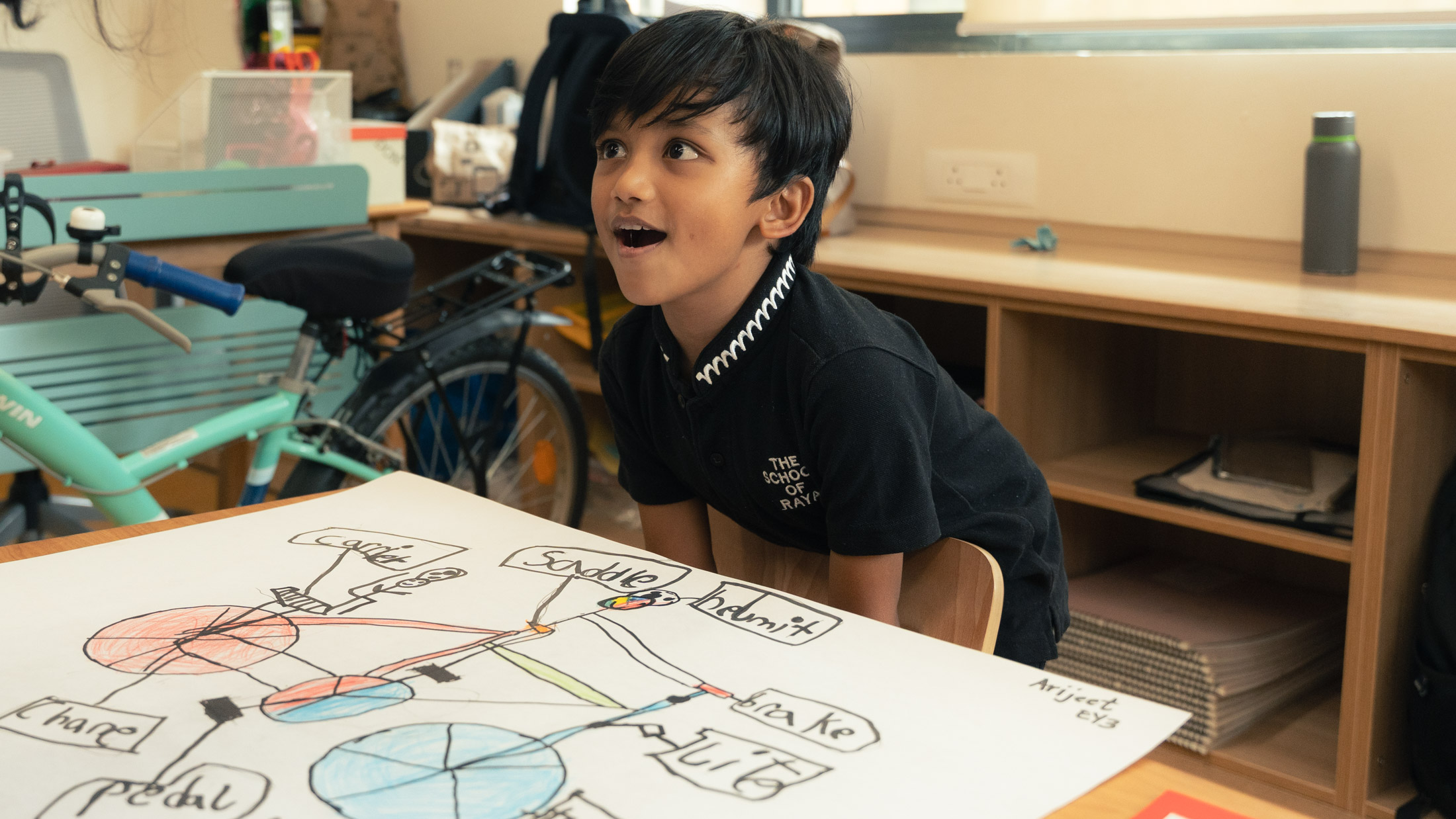
Consider a child in the Early Years Programme (EYP), watching a puddle disappear after a morning of sunshine.
“How did the water go?”
A perfectly reasonable question. Also, potentially, the beginning of a rather substantial investigation into evaporation, temperature, observation and the behaviour of matter. The child, of course, may simply want to know where their puddle went. One need not introduce the water cycle before breakfast. But something important has begun. The child has noticed something, found it puzzling and wanted to understand it.

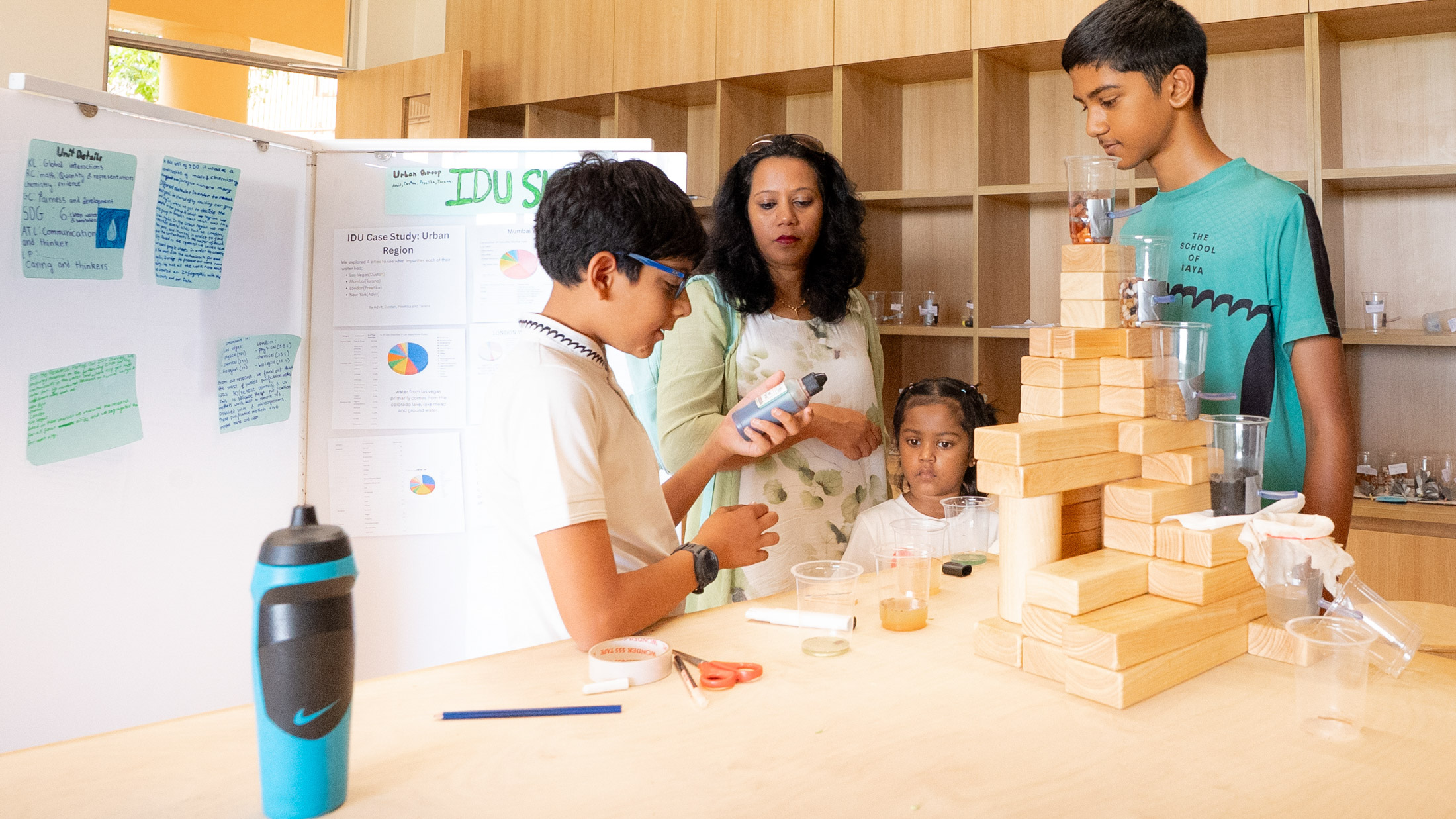
Move forward a few years into the Primary Years Programme (PYP), and the questions begin to connect. How does water move through our environment? Who has access to it? What happens when communities do not have enough? An observation has become an inquiry. The child is beginning to see that the world is not organised into separate school subjects, however convenient that arrangement may be for timetables.
In the Middle Years Programme (MYP), the questions become more analytical. How does a photograph influence what we believe? How does a society decide what is fair? How can the same event be understood differently by different people?
And then comes the Diploma Programme (DP), where students encounter the rather uncomfortable but intellectually rewarding possibility that understanding something is not always the same as agreeing with it.
How does a writer construct meaning? How does language shape identity? How do we know whether an argument is convincing, or merely sounds convincing? How might two opposing interpretations both reveal something worth considering?
The questions have grown up. The curiosity has not disappeared.
This is what I find particularly compelling about the IB continuum. EYP, PYP, MYP and DP are not simply four stages in which students accumulate increasingly difficult content. They represent a progression in how young people engage with knowledge: from noticing, to investigating, to analysing, to evaluating and creating.
The curriculum does not merely ask students to know more. It asks them to think differently.
As an English Language and Literature teacher, I have a particular fondness for the question how. It is, after all, the question that makes literature interesting.
A student reading a novel might identify a character as lonely. That is a reasonable observation. But how does the writer make us feel that loneliness? Through the setting? The dialogue? The absence of dialogue? Perhaps the character is surrounded by people but never quite belongs to the room.

Now we are getting somewhere.
A metaphor is no longer simply a metaphor to identify. It becomes a way of understanding how language makes an abstract experience tangible. A narrative voice is not merely a technical feature. It determines whose story we hear, whose version we trust, and whose experience might remain outside the frame.
Even silence becomes interesting.
What is left unsaid? Why does it matter? Who benefits from that silence?
These questions take students beyond reading for information. They teach them to read for intention, implication, perspective and power.
And once students begin noticing how meaning is constructed in literature, they become better equipped to notice it elsewhere: in advertisements, political speeches, social media, and the everyday language through which people persuade, include, exclude, exaggerate and occasionally tell the truth.
The world, it turns out, is rather full of texts. Some simply have better punctuation than others.
There is an odd assumption that a good student is someone who knows the answer. I have always found this definition a little limiting.
A student who knows the answer may have remembered it, understood it, or worked it out. All valuable things. But what happens when the answer is unfamiliar? When the problem has no obvious solution? When the first attempt fails?
This is where learning becomes interesting.
A student who can recognise a difficulty, identify what they need, reconsider their approach and seek help is developing something more enduring than the ability to complete a particular task.
They are developing agency.

And agency is not the same as independence in the sense of never needing anyone. It is the ability to take an active role in one’s own learning, including knowing when to collaborate, when to question and when to begin again.
Students do not leave school and enter a world that politely arranges its challenges according to the chapters they have completed. They encounter uncertainty, contradiction, change and other people, with entirely different ideas about how things ought to work.
A curriculum that makes room for inquiry, reflection and different perspectives is not making learning less rigorous. It is preparing students for the kind of thinking that cannot be rehearsed in advance.
The most interesting transformation, however, may be less visible. A young child asks how something works. A PYP learner begins investigating how ideas connect. An MYP student examines how meaning is constructed. A DP student evaluates how knowledge is produced, interpreted and used.
But somewhere along the way, another question develops.
How do I respond to the world around me? How do I use what I know responsibly? How do I disagree without dismissing someone? How do I recognise when I am wrong? How do I contribute something worthwhile?
These are not questions that belong to a particular subject or assessment criterion. They emerge when learning begins to shape the learner.
At Raya, the IB framework provides the structure for this progression, while the idea of Find Your Flow recognises something equally important: children do not all arrive at their potential by following identical routes. One might discover confidence through a scientific investigation. Another through a
performance, a sporting challenge, a literary interpretation or an idea pursued long after the lesson has ended.
The point is not to make every student good at everything. That would be an exhausting educational ambition, and probably an impossible one. It is to help each student discover what they are capable of, while developing the intellectual and human capacities to engage with what lies beyond their immediate strengths.
I often think that the real measure of a student’s learning is not how quickly they can answer a question, but what happens when they cannot.
Do they withdraw? Wait for someone else to think for them? Or do they become curious enough to investigate, patient enough to reconsider, and confident enough to try?

There is no curriculum that can guarantee a life without difficulty. Nor should that be its ambition. What education can offer is something more useful: the knowledge to understand, the language to articulate, the judgement to evaluate and the confidence to act.
And perhaps, above all, the ability to keep asking. Because the child who asks how a puddle disappears may one day ask how a society changes. The student who learns to question a writer’s choices may eventually question the assumptions shaping their own world.
The subject matter changes. The stakes become greater. But the intellectual instinct is recognisable.
I think that is what makes the question how so powerful. It does not simply seek an explanation.
It opens a relationship between the learner and the world — one built on curiosity, possibility and the willingness to look again.
A good education does not teach a child to have an answer for everything. It teaches them how to meet the things they do not yet understand.
And that is a rather good place to begin.